Adiabatic Flame Temperature with TBGA
Why TBGA?
Measuring temperature inside a combustion flame is deceptively difficult. Thermocouples radiate heat away from the measurement point, can catalyse reactions on their surfaces, and simply cannot survive for long at the temperatures encountered inside a gas turbine combustor. Temperature by Gas Analysis (TBGA) sidesteps these problems entirely: rather than measuring temperature directly, it calculates temperature from the chemical composition of the combustion gases.


The Principle
When fuel and air react, the resulting mixture of CO₂, CO, unburned hydrocarbons, NOx, O₂ and water vapour contains information about the combustion process. By sampling this gas mixture and applying an energy balance, it is possible to calculate the adiabatic flame temperature—the theoretical temperature the gas would reach if no heat were lost to the surroundings.
Because the calculation is derived from gas concentrations rather than from a physical probe measuring temperature within the flame, TBGA avoids the radiative losses, catalytic effects and survivability limitations that make direct temperature measurement so difficult in high-temperature combustion environments.
Application to Gas Turbines
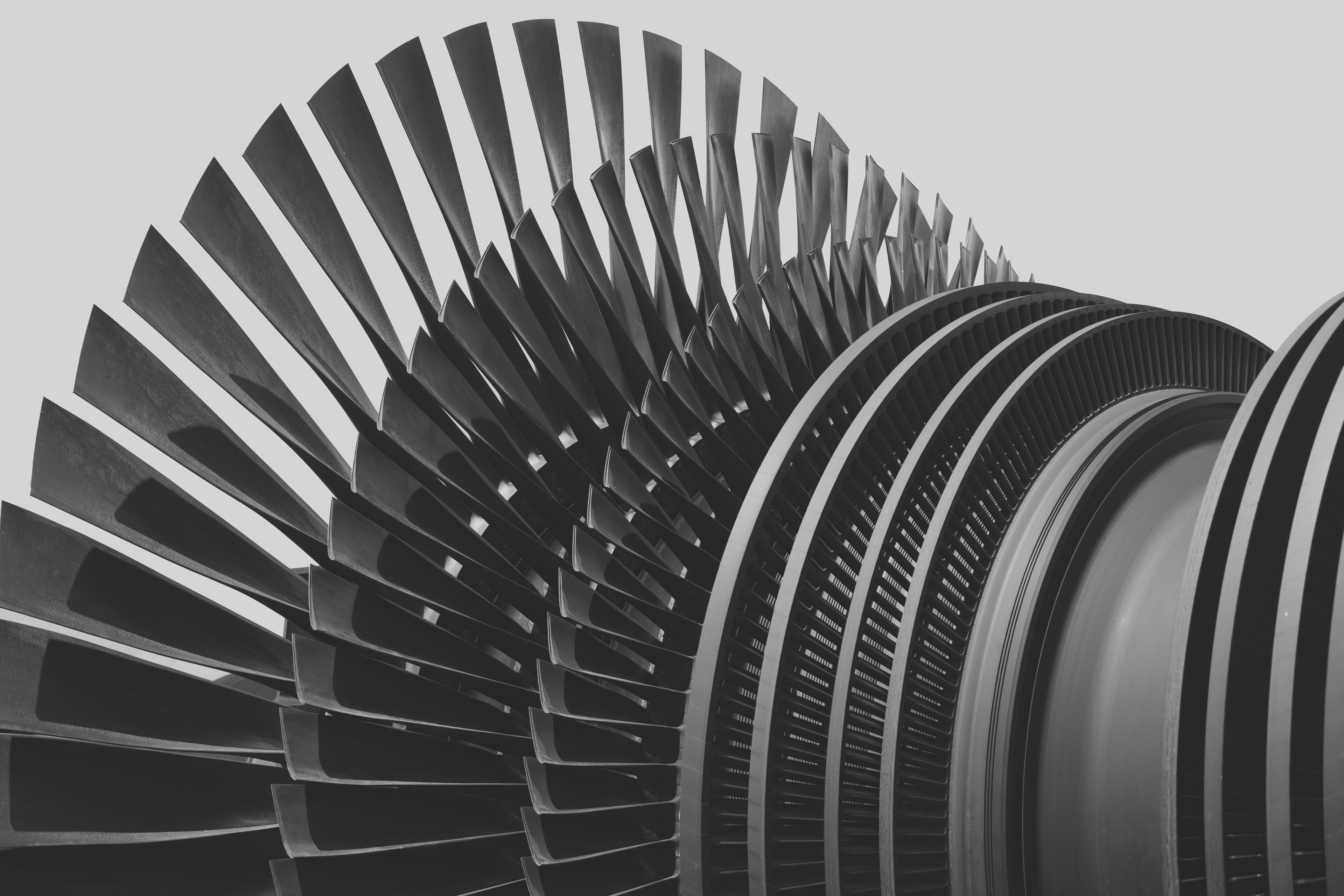
Inside a gas turbine combustor, the temperature distribution at the combustor exit—often characterised by the pattern factor—has a direct influence on turbine blade life. Hot streaks accelerate creep and oxidation of downstream turbine vanes and blades, while a poorly characterised temperature profile can lead engineers to under- or over-design cooling systems.
Because direct thermocouple rakes are impractical under combustor exit conditions, where extreme temperatures and limited probe life present significant challenges, TBGA offers combustor developers a practical way to characterise exit temperature profiles using gas samples. These measurements can inform fuel nozzle design, cooling-flow allocation and emissions optimisation, without requiring a temperature sensor to survive within the flame itself.
Why Fast Response Matters
Cambustion's Fast Exhaust Gas Analyser combines fast-response NOx, hydrocarbon and CO/CO₂ analysers—the CLD50, FID50 and NDIR50—in a single integrated stack, delivering gas composition measurements with industry-leading response times of 55 milliseconds. At this speed, variations in gas composition—and, by extension, TBGA-derived temperature—can be resolved at much finer temporal and spatial scales than with conventional, slower gas analysis.
When this fast response is combined with a mechanical traverse system, a sampling probe can be swept through the measurement plane. Each fast gas-composition measurement corresponds to a known spatial position, and applying the TBGA calculation at each point builds a detailed temperature map across the traverse. The DPU50 is a live data processing module designed to receive the emissions data from the Fast Exhaust Gas Analyser and output the TBGA derived adiabatic flame temeprature directly into DAQ systems.
This approach reveals the location, extent and severity of hot streaks at a resolution that slower sampling techniques cannot achieve. It gives combustor engineers the spatial detail needed to refine fuel nozzle and dilution-hole design, validate CFD predictions, and characterise and manage pattern factor with confidence.