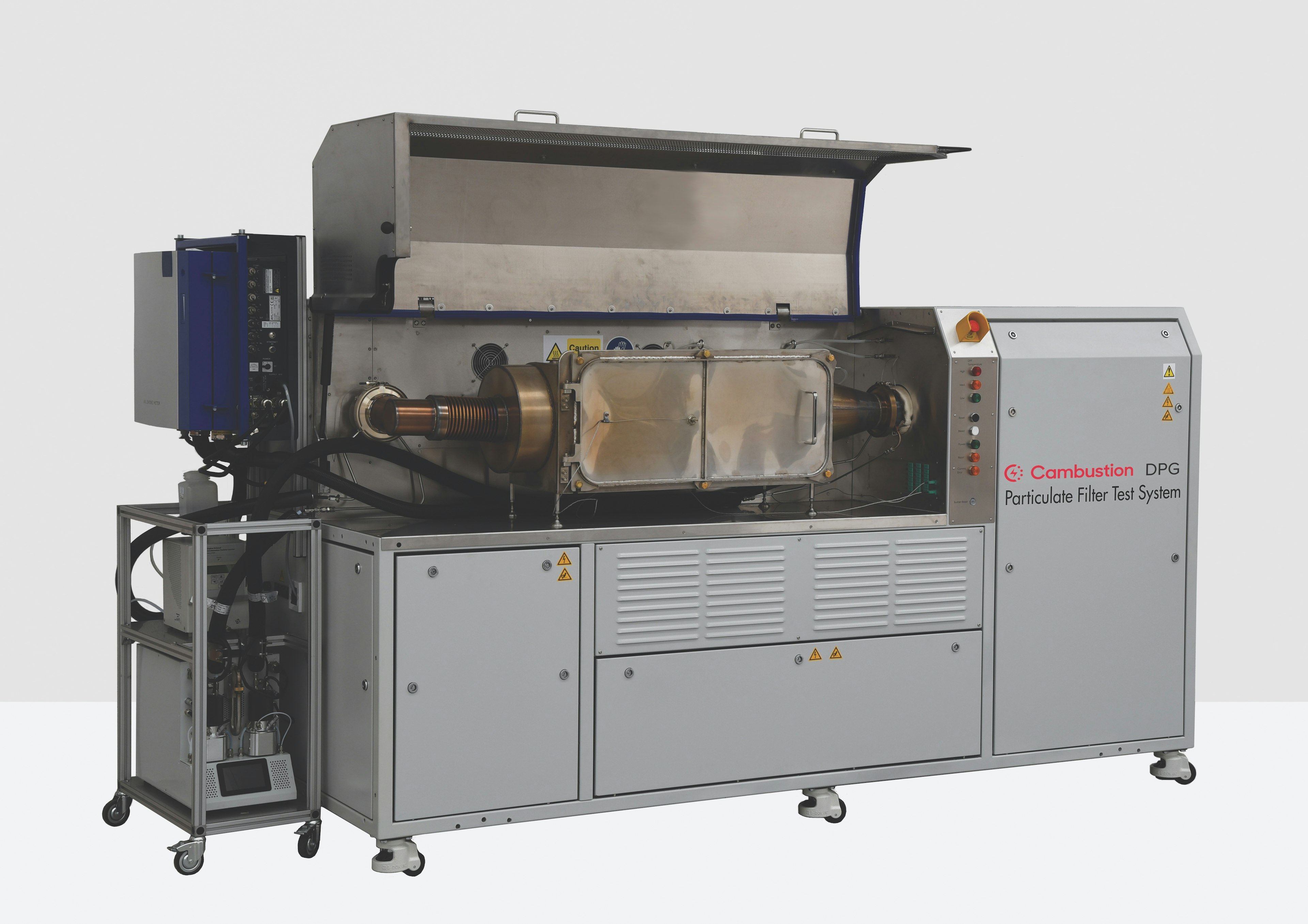
DPG | Particulate Filter Testing System
Conventional Filter Testing
Traditionally particulate filters have been tested in a variety of ways, combining cold flow bench tests with measurements of backpressure made using an engine and dynamometer to produce soot. The former use artifical soot, with markedly different characteristics to engine generated soot. While widely adopted, engine dynamometer testing requires expensive facilities and staff, and extreme care must be taken to ensure good repeatability and reproducability. The interaction between engine and filter means that evaluation of different filters on a given engine platform may be extremely complex.
The Cambustion DPG Solution
Soot Loading
The dependence of filter backpressure (Δp) on the soot load on a filter is a very important quality control parameter for modern engine control strategies where a backpressure sensor is used in the triggering of filter regenerations. The DPG loads a filter from an empty state and continually monitors Δp and automatically processes the results using loaded and empty weighings of the filter to provide a far better measurement of loading behaviour than is achievable with engine testing.
Regeneration
Control over the DPF inlet conditions allows the DPG to regenerate filters. This can provide a simple means of de-greening filters, regeneration after soot loading tests, or allow more complicated studies such as Soot Mass Limit tests, where the DPG's improved reproducibility and repeatability offer substantial advantages.
Cold Flow Tests
The DPG can also make cold flow tests, and results may be corrected to any set of reference conditions.
Advantages
The DPG has lower infrastructure and operation costs than an engine dynamometer.
Further, the computer control allows the system to operate unmanned for substantial portions of the test- only requiring operator input to weigh or change filters.
The DPG allows customers to study the behaviour of a filter without the corresponding difficulties associated with engine tests, avoiding issues such as passive regeneration due to NOₓ and engine / filter interactions due to backpressure.
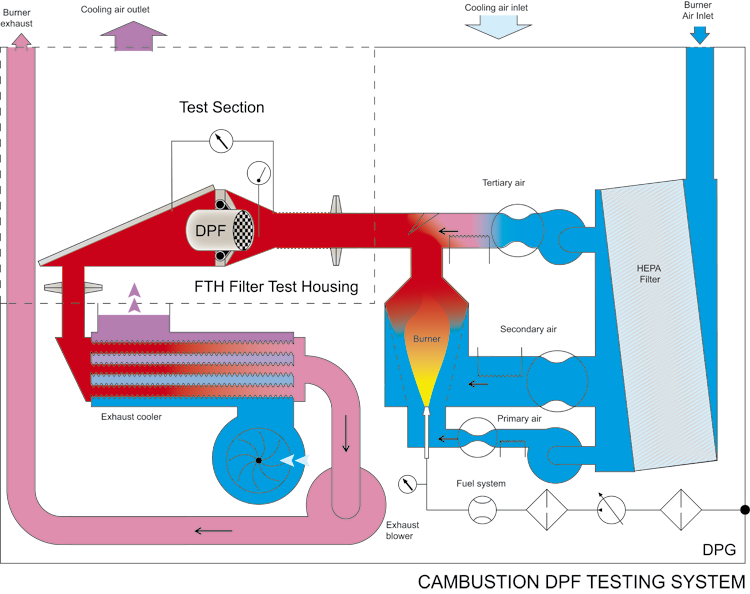
The DPG allows the filter to be preheated to the loading temperature and flow conditions, while not producing any soot. The burner settings are then automatically switched to a soot producing mode while maintaining the same filter inlet conditions. This allows the pore filling stage of filtration to be studied in unprecedented detail.
Applications
For a list of Application Notes which offer detailed guidance on common uses of the DPG, click here.
In production quality assurance applications the DPG allows validation of backpressure characteristics, filtration efficiency and regeneration performance.
In an R&D environment it provides economic and repeatable soot loading of filters to support engine and after-treatment development.
Key Application Notes
| Title | Data Type | Download File | Size | Last Updated | |||||
|---|---|---|---|---|---|---|---|---|---|
| Title | Gasoline Particulate Filter (GPF) testing | Data Type | Application note | Download File | dpg012v01-gpf-testing.pdf | Size | 134.67 KB | Last Updated | |
| Title | Sub-scale and oxygen control accessories | Data Type | Application note | Download File | dpg-010v02.pdf | Size | 929.75 KB | Last Updated | |
| Title | DPG Repeatability | Data Type | Application note | Download File | dpg-007-dpg-repeatability.pdf | Size | 97.62 KB | Last Updated |
Need more information? Connect to an expert
DPG Brochure
For further information, please download the DPG brochure or contact Cambustion.
DPG Application Summary
Download a brief 2-page summary for an overview of DPG applications.
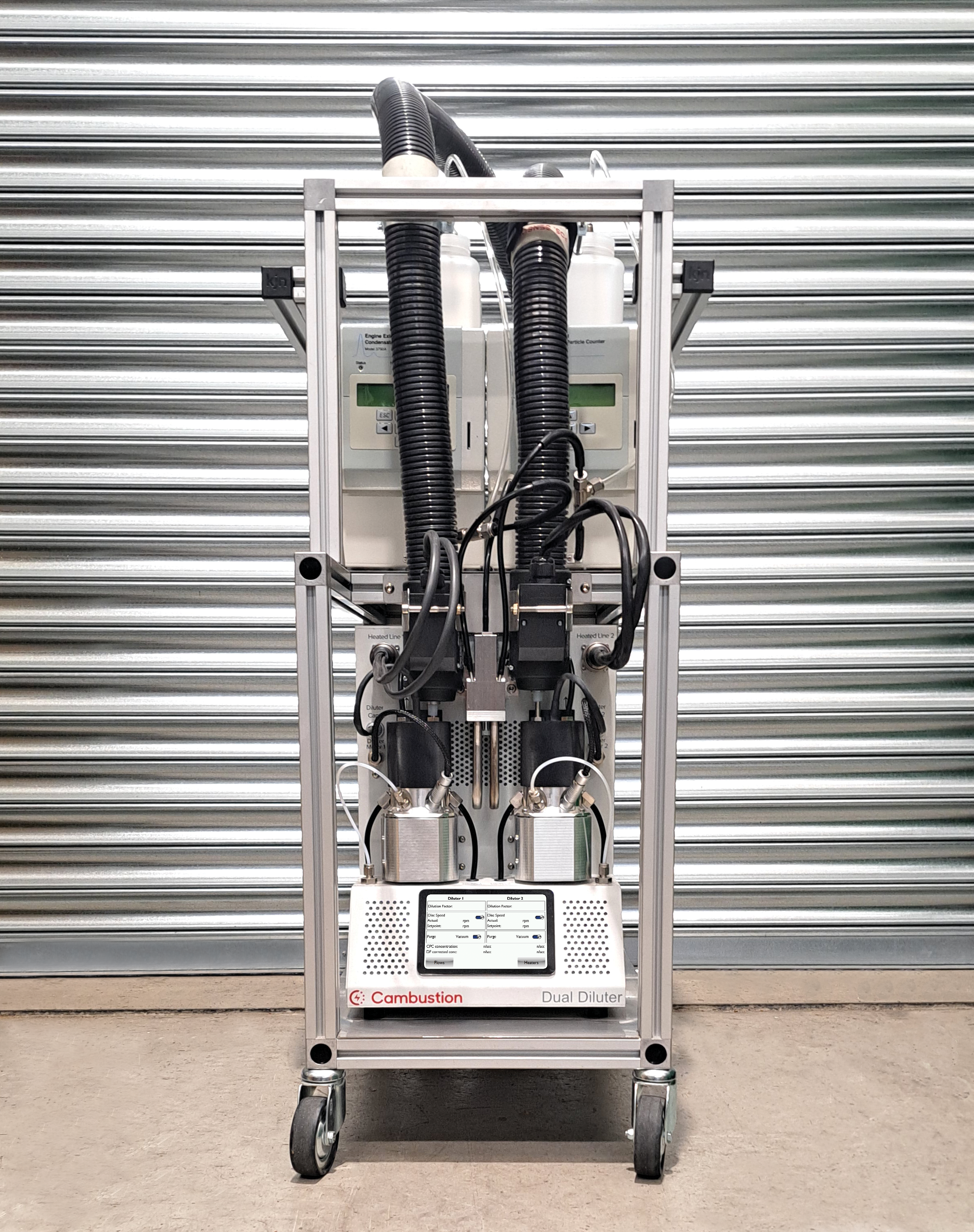
Dual Simultaneous Diluter Accessory
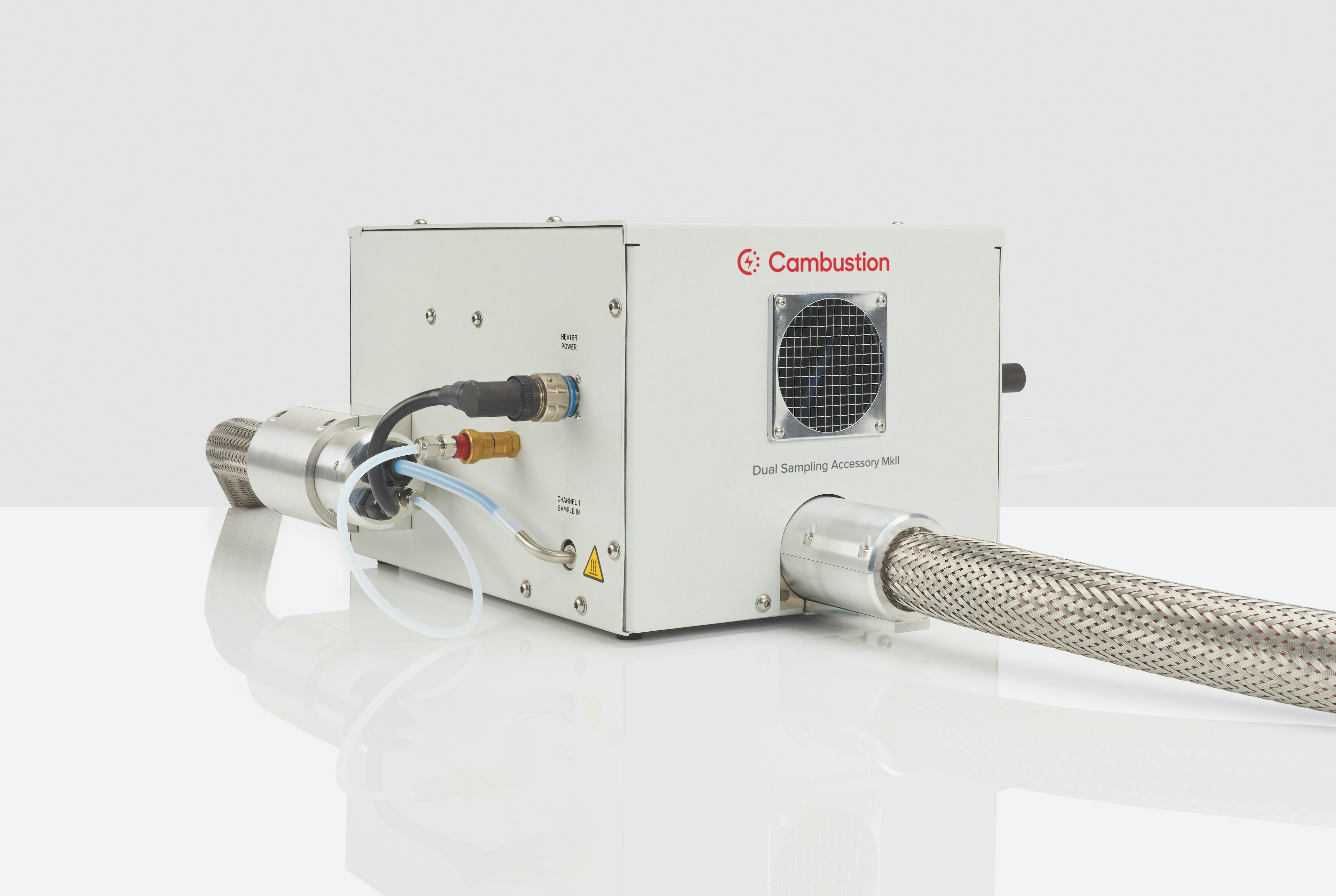
The dual simultaneous diluter (DSD) system is designed for sampling upstream and downstream of a particulate filter. The DSD can work with one or two CPCs. Dual CPC configuration allows the user to measure the PN filtration efficiency performance in real time
Filter Test Housing accessory for bare brick testing
Cambustion offer a Filter Test Housing (FTH) for use with the DPG. This reusable DPF housing allows an uncanned filter to be fitted to the DPG and loaded / regenerated as required. The filter can be quickly removed for weighing and examination, even at elevated temperatures.
This ability is particularly advantageous in both R&D and Quality Control applications, and allows filters to be tested before coating or other final processes take place.
DPF&GPF Testing Service
Cambustion also offer a filter loading / testing service, using the DPG. For more information please see our Engineering Services pages.
DPF Testing Service
Fundamental DPF performance tests which are becoming the basis for Industry-wide Standards. Cambustion provides a confidential, UK-based testing service to determine these characteristics on behalf of customers using a DPF testing system.
DPG Video
The Cambustion DPG is a standalone system for testing Diesel Particulate Filters through soot loading and regeneration. The DPG burns diesel fuel to produce soot particles at a carefully controlled rate, and loads them onto a DPF. The DPG is computer controlled and can also regenerate DPFs.

FTH Video
Cambustion offer a Filter Test Housing for use with the DPG. This reusable DPF housing allows an uncanned filter to be fitted to the DPG and loaded / regenerated as required. The filter can be quickly removed for weighing and examination, even at elevated temperatures.